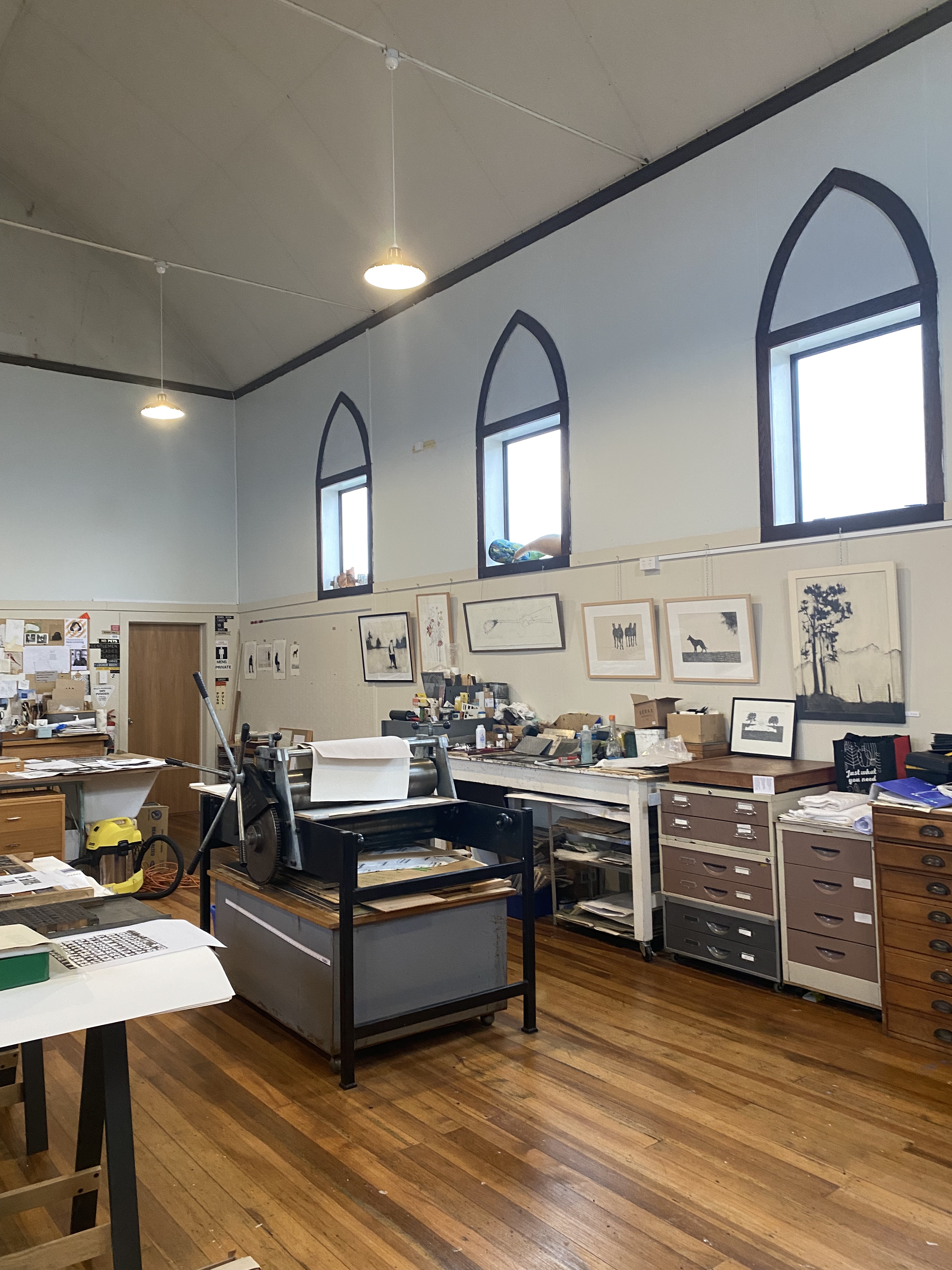
When stepping into Catherine Macdonald’s studio for the first time, I was filled with a sense of awe and reverence. This could have been induced in part by the building’s former incarnation as a church hall, though no doubt from the light streaming in through rows of windows high above illuminating the collection of prints, drawings, sculptures and furniture placed ceremoniously within the space, each piece emanating an aura of thoughtful consideration to form, line and place.
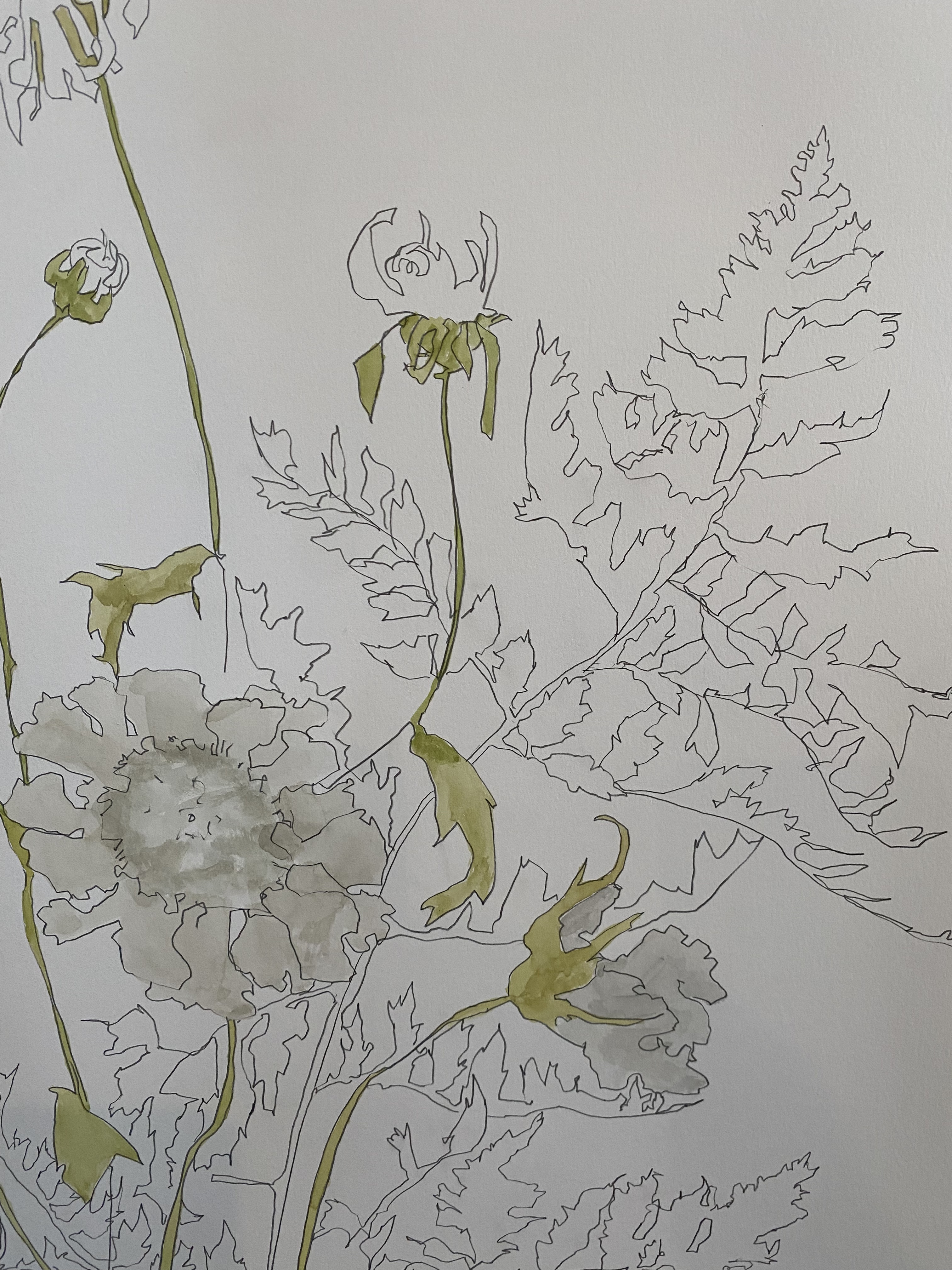
Central to her practice is an engagement with her immediate environment, both built and natural. Huddled trees, solitary power poles, curious animals, and the occasional wildflower, that might be confused for a weed forcing its way up through the pavement, are reoccurring images that feature in her work. When asked how she selects her subjects, she confesses “I don’t know, I think it’s just the things I see every day get stuck in my head and I need to figure them out.”
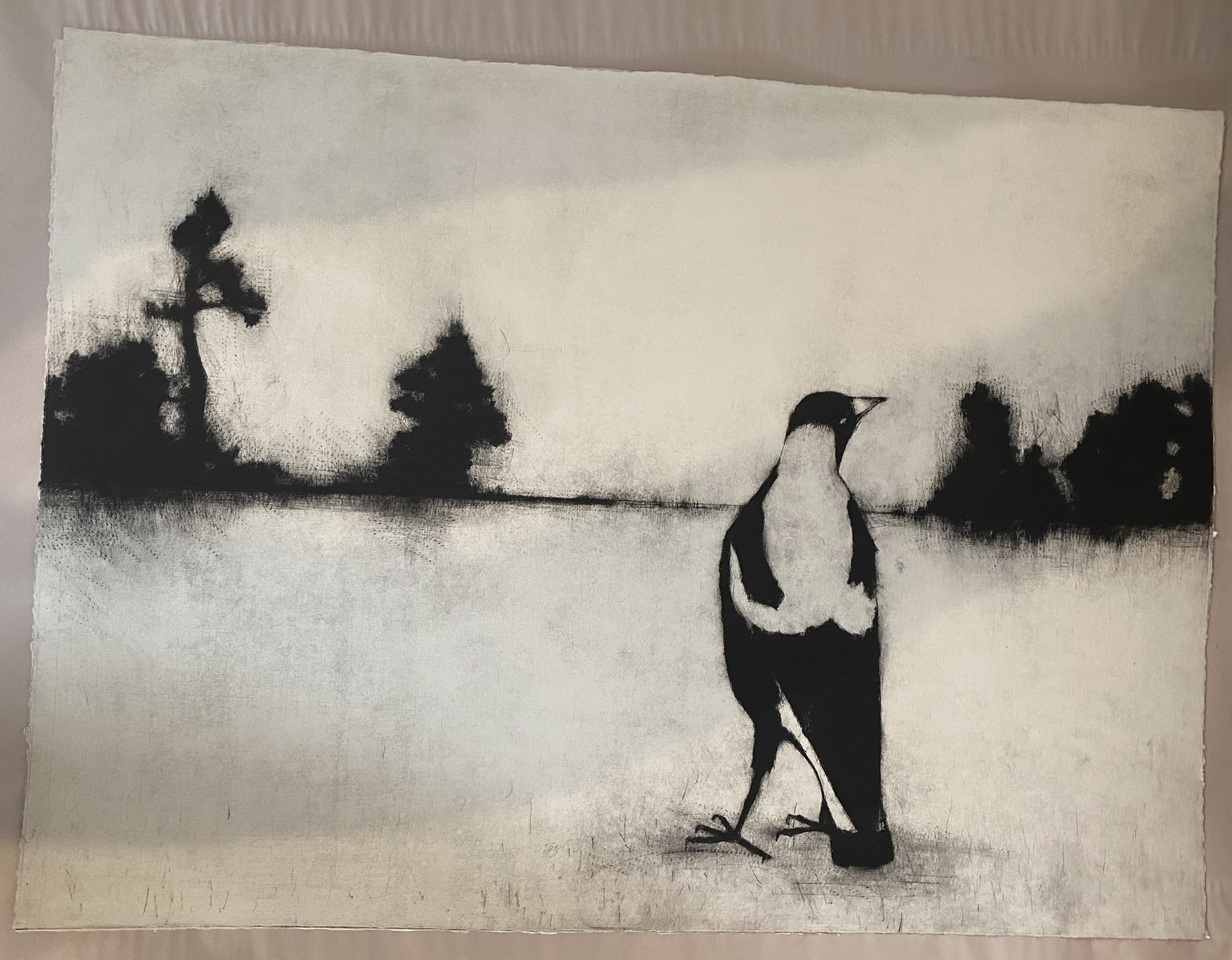
Her subjects are rendered in a limited palette of varying densities of black and graphite on creamy beige backgrounds giving the work a soft, nostalgic feel. Bold shapes often occupy the space as silhouettes, allowing the viewer to fill in the blanks or meandering lines employed to pair the image back to its simplest form. Macdonald credits Japanese and Chinese drawings and their use of composition and line as having a major influence on her how her drawing practice has evolved. At the same time, she had a drawing tutor who she said, “got us to do a lot of blind drawings and contour drawings and that clicked with my brain”.
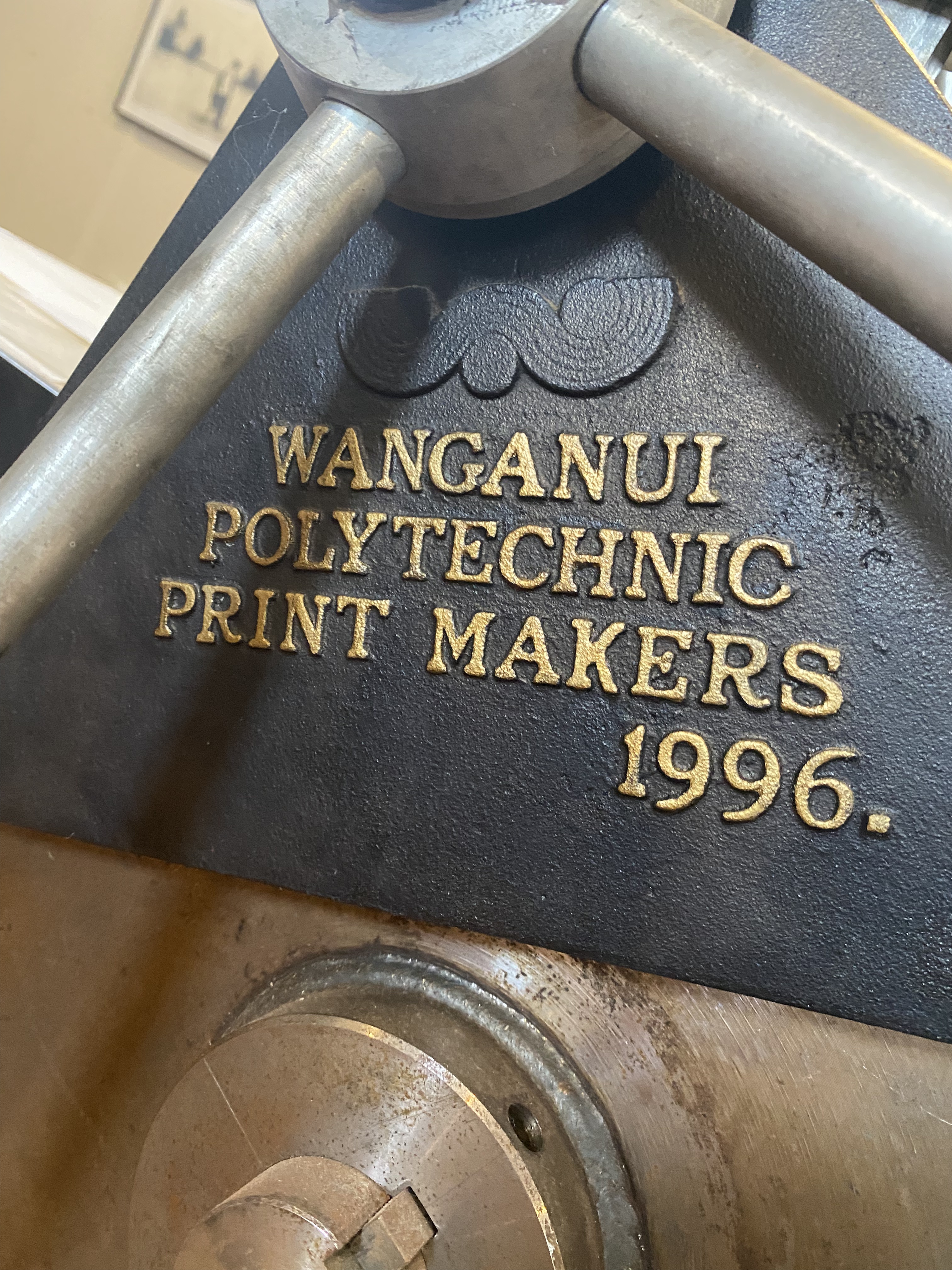
Despite abstract painting being prevalent when she entered Whanganui Regional Polytechnic in 1997, printmaking and drawing appealed to Macdonald for their narrative qualities which were important at her. Her high school teacher, Whanganui artist Graham Hall, had introduced her to printmaking and encouraged her to continue instead of doing a science degree, which she had previously planned. Not wanting to leave Whanganui, Macdonald applied for both fine arts and fashion, believing a fashion degree would pave a better pathway to employment. When she was accepted onto both courses, she was unsure which to choose until her father challenged her to choose what she was most passionate about, which was fine arts.
After graduating she searched for a way to support herself as an artist in Whanganui, where she was born and raised and has close ties to her family. Training to become a teacher presented itself as a logical option, though didn’t appeal to Macdonald who describes herself as a ‘quiet person’.
Discovering a run-down warehouse in Whanganui East that she could afford to purchase without having to get a second job to pay an astronomical mortgage, sparked the realisation that it was possible to have a live-in studio where she could make her work uninterrupted. Despite missing out on that purchase, she continued searching until she found her current studio in 2002.
The previous year, Macdonald, along with local printmaker Sue Cooke, organised the first Whanganui Open Studios. The aim was to highlight how neglected spaces in the city, which were in threat of being torn down, were in fact used by local artists to make work and forge viable careers in the arts industry. Starting with just twelve artists, the pair advertised in the local paper and used physical mailing lists to post invites to locals. There were 500 visitors that first year and the annual event has continued to grow into what is now the longest running and largest arts trail and the country.
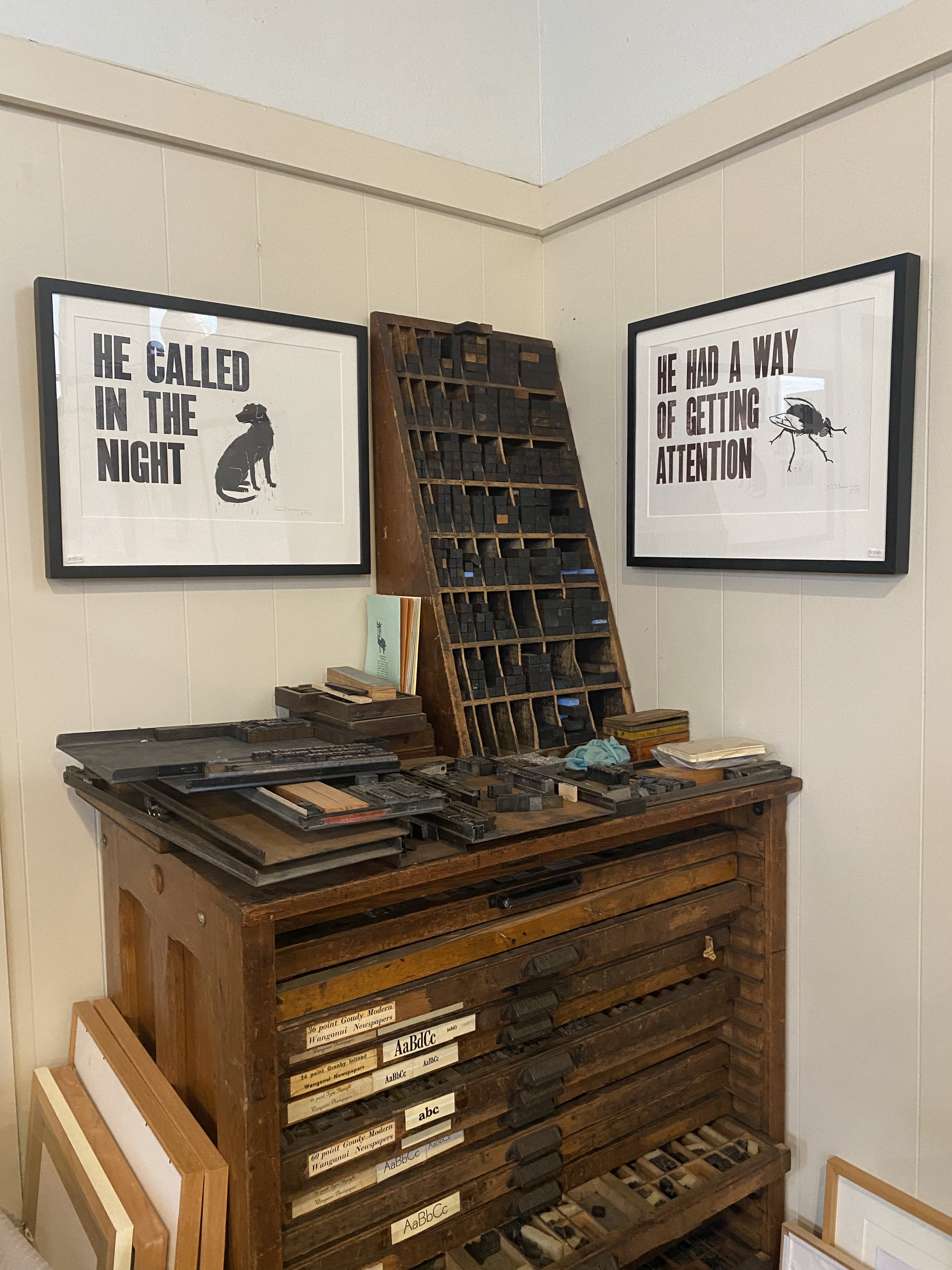
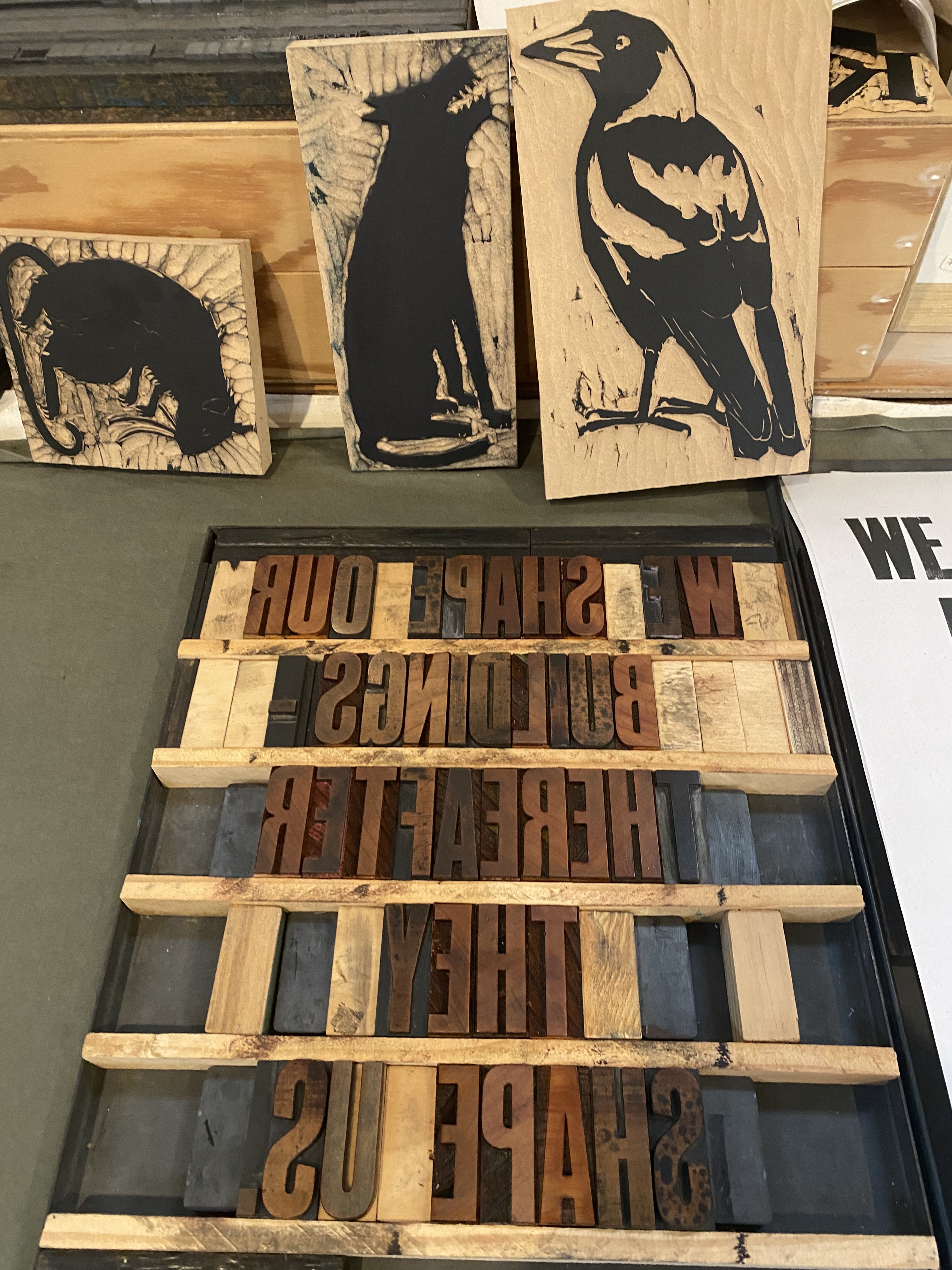
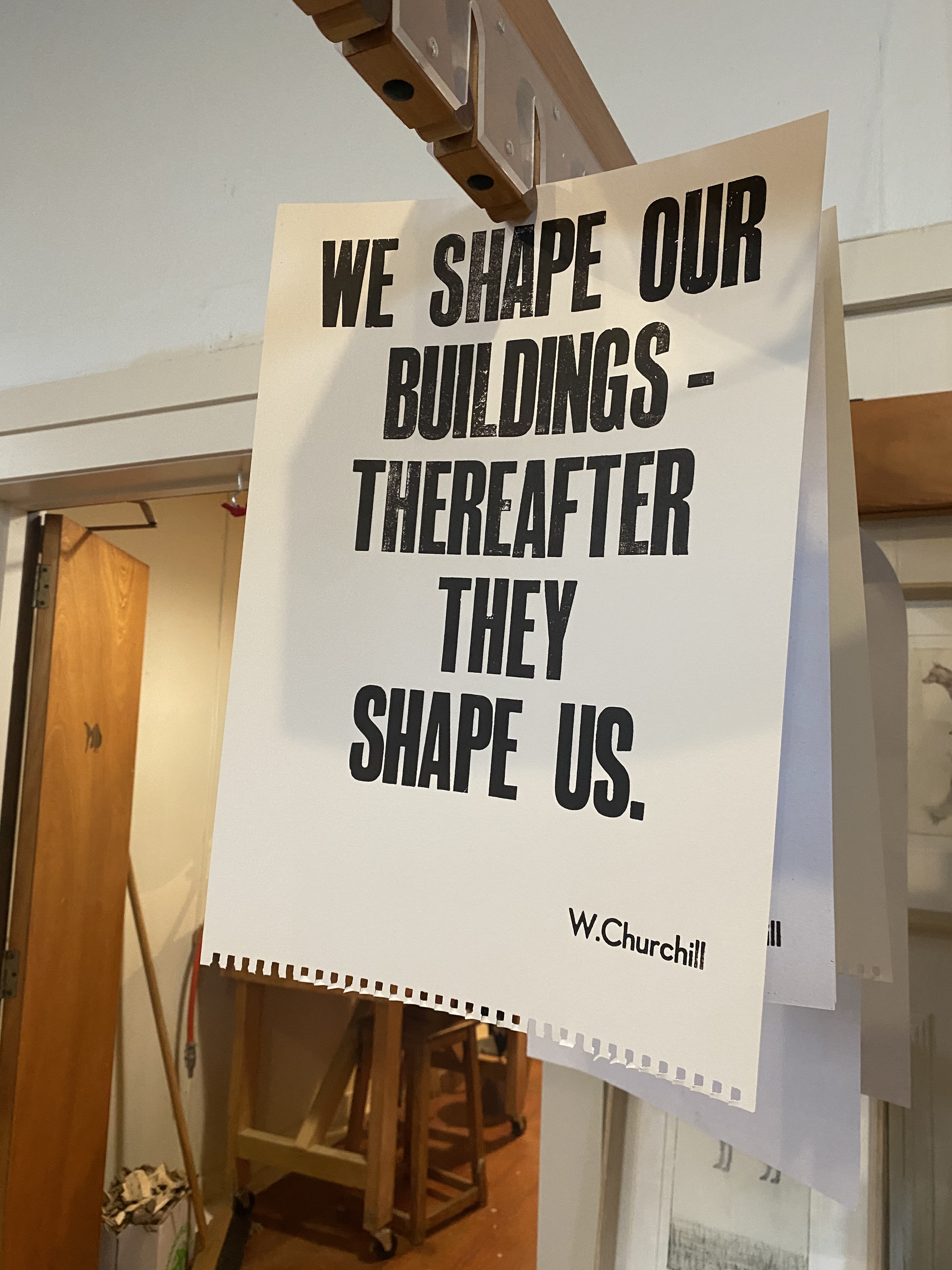
Macdonald’s studio provides the space for her to work across a range of mediums requiring specialised tools, presses and equipment. An1879 Albion Platen Relief Press, rescued from out the back of an op shop in Levin, sits in one corner, next to a typecase containing trays of various sized wooden type. Hand-carved woodblocks are neatly displayed, balanced alongside a letterpress chase that reads: ‘We shape our building – thereafter they shape us’ W. Churchill. Scattered around the studio, her large letterpress prints combine thought-provoking and often amusing phrases. Like her zines, these are a way for Macdonald to be creative in a playful, light-hearted manner.
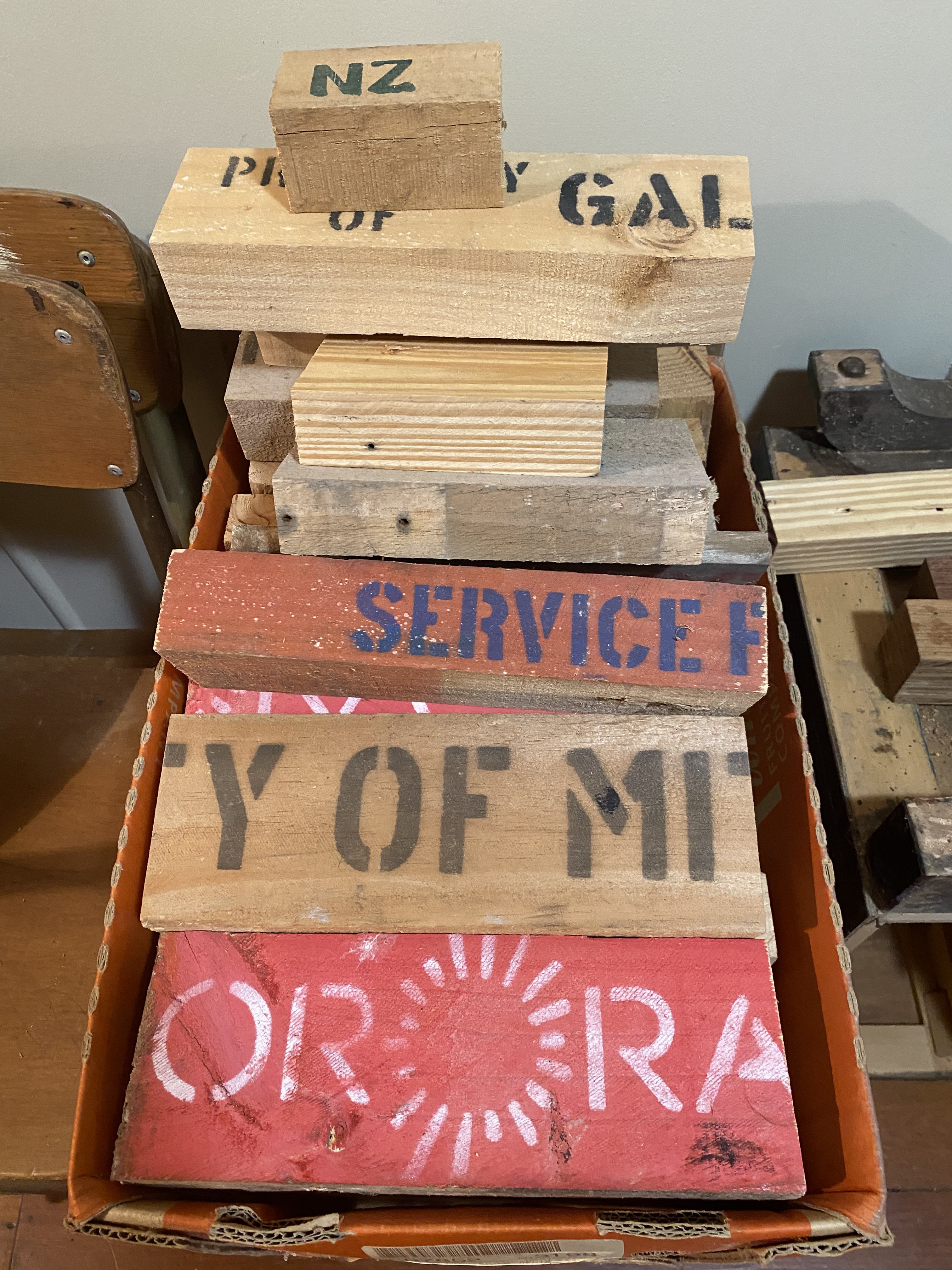
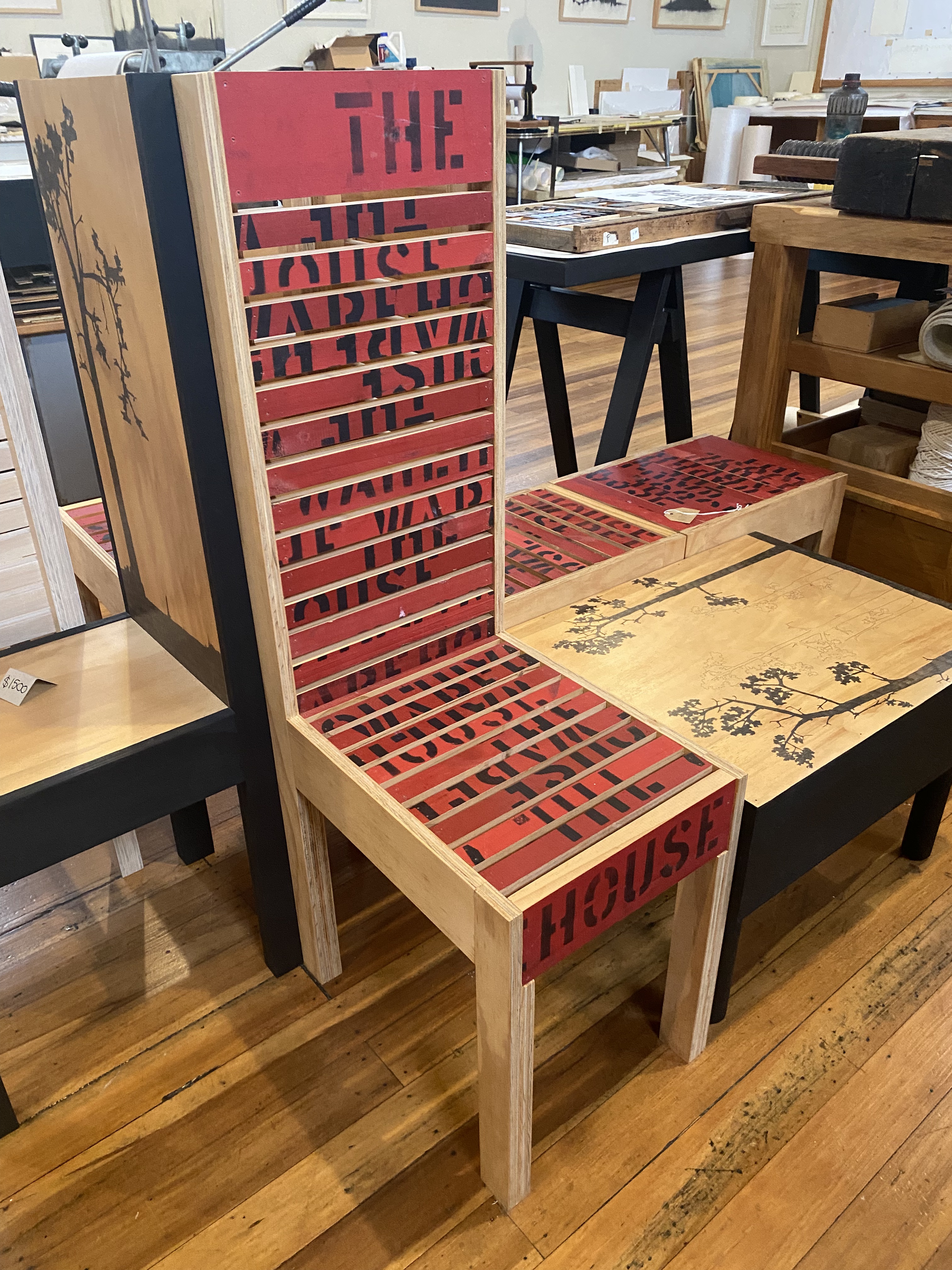
Letters and words stencilled onto salvaged, wooden pallets have been dissected and reassembled forming new phrases on chairs, coffee tables and small sculptures displayed in her studio. Other pieces have been constructed from up-cycled furniture parts from local op shops, embellished with her signature graphite line drawings.
Perhaps the most stunning pieces in her impressive body of work are her drypoints. Attaching large, thin aluminium plates to the wall, Macdonald uses a Dremel to build up large, dense areas of black. Working in small bursts to ensure care for her body, she uses a range of tools to add complex layers formed by a multiplicity of expressive lines and dots. One of her favourite drypoint tools, picked up while browsing her local op shop, is used to make haphazard marks in the background. Macdonald explains that she adopted this technique when she discovered that the discarded aluminium from the local newspapers was a fraction of the cost of the zinc plates she was using for etching. It changed the way she worked, she could work more freely, not daunted by cost of materials.
Through her resourcefulness, quiet dedication, and keen observation of her everyday surroundings, Macdonald’s transformation of simple materials into rich narratives is a testament to the power of staying put and shaping a meaningful, creative life right where you belong.
References:
Artist website: catherinemacdonald.co.nz
Artist Open Studios Website: openstudios.co.nz

